
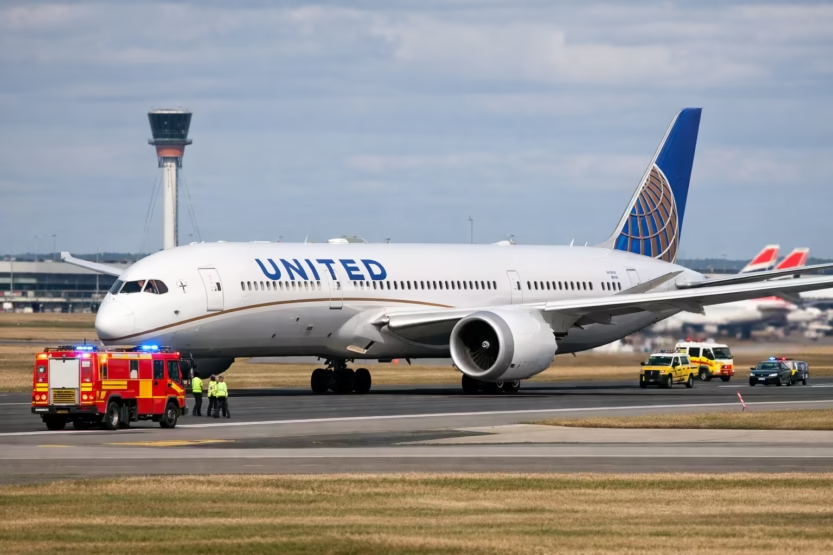
In late May 2025, the aviation world watched closely as United Airlines Flight UA770 emergency diversion became headline news across airline tracking systems and media outlets. This transatlantic journey — originally scheduled to operate between Barcelona’s El Prat Airport and Chicago O’Hare International Airport — was forced to divert mid-flight to London’s Heathrow Airport following an in-flight alert. Thanks to quick action from pilots and crew, the flight landed safely, demonstrating world-class aviation safety procedures and emergency response.
From the moment the Boeing 787-9 Dreamliner departed Spain’s Mediterranean coast, passengers expected a routine eight-hour flight. Instead, what followed was an unexpected detour that would highlight the importance of training, communication, and strict adherence to safety protocols in modern commercial aviation. This comprehensive breakdown explains what happened, why it happened, and what passengers and airlines can learn from the event, with a detailed FAQ at the end for quick reference.
Route and Aircraft Details
Flight Number: UA770
Operator: United Airlines
Aircraft: Boeing 787-9 Dreamliner
Departure Airport: Barcelona El Prat Airport (BCN)
Destination: Chicago O’Hare International Airport (ORD)
Diversion Airport: London Heathrow Airport (LHR)
Date of Incident: May 27, 2025
Flight UA770 was carrying more than 250 passengers and crew members when the incident occurred over the North Atlantic. Like many long-haul flights, the aircraft was cruising at an altitude above 35,000 feet when the anomaly occurred.
What Triggered the Emergency Diversion?
The term “emergency diversion” signifies a change in an aircraft’s landing plans due to issues such as technical anomalies, medical emergencies, security threats, or extreme weather. In the case of United Airlines Flight UA770 emergency diversion, early reports show it was caused by a warning related to cabin pressurization systems — a crucial part of flight safety.
Modern aircraft continuously monitor their systems. When safety sensors detect potential irregularities, they generate alerts that pilots must take seriously — even if there is no immediate danger. Cabin pressurization systems manage the air pressure passengers breathe at high altitudes. A failure — or potential failure — could affect oxygen levels and passenger comfort, and it would be negligent for a flight crew to ignore such a warning.
From Routine to Emergency
The aircraft had completed its ascent and was well into its journey when the cockpit’s automated systems detected a possible fault. Rather than waiting to see if it worsened, the flight crew followed standard operating procedures:
-
Identified the Issue: A cabin pressurization anomaly alert appeared on the flight deck, likely signaling a component irregularity even though no pressure loss was confirmed.
-
Activated Safety Protocols: The pilots declared a general emergency to air traffic controllers, requesting priority handling. In aviation, this is often done using the emergency code “squawk 7700,” which signals an emergency situation to all relevant ground and airborne systems.
-
Selected the Nearest Suitable Airport: Instead of proceeding to Chicago, the crew diverted toward London Heathrow Airport (LHR) — one of Europe’s most equipped hubs for aircraft inspection, emergency services, and maintenance support.
-
Safe Descent and Landing: UA770 descended safely toward Heathrow, touching down with no injuries reported among passengers or crew.
Why Heathrow Was Chosen
Choosing a diversion airport is not random. Airlines consider factors like:
-
Proximity: Heathrow was the nearest highly equipped international hub.
-
Support Infrastructure: Facilities for immediate aircraft inspection and medical readiness.
-
Passenger Needs: Accessibility to accommodations and onward travel options.
While some diversions due to pressurization warnings lead to emergency oxygen deployment, that did not occur here. This suggests the alert was precautionary — the aircraft’s systems were doing exactly what they were designed to do: detect potential problems early so they do not escalate.
Inside the Boeing 787-9 Dreamliner
The Boeing 787-9 Dreamliner is one of the most advanced commercial aircraft in service. Its aircraft health monitoring systems continuously collect data from thousands of sensors, helping flight crews identify anomalies before they become harmful. These systems monitor:
-
Cabin pressure and air quality
-
Environmental controls
-
Hydraulic and electrical systems
-
Engine performance and fuel systems
When the pressurization system alert appeared, backup systems likely operated normally, but the crew still chose safety first — a decision praised by aviation analysts worldwide.
Crew Training and Emergency Response
One reason the United Airlines Flight UA770 emergency diversion ended without injuries is the crew’s professionalism. Flight crews undergo rigorous training that includes:
-
Recognizing and responding to automated system alerts
-
Communicating effectively with air traffic control
-
Managing passenger anxiety and in-flight communication
-
Executing emergency diversion checklists under pressure
This event underscores how modern aviation training programs prepare crews for the unexpected, ensuring they can keep passengers safe even when a routine journey turns serious.
United Airlines’ On-Ground Support
Once UA770 landed safely at Heathrow:
-
Emergency and ground support crews were on standby as a precaution.
-
Passengers were briefed calmly and assisted with their onward travel plans.
-
United Airlines offered rebooking options, accommodations, and meal vouchers where needed.
Such post-landing protocols help ensure passengers affected by diversions feel supported and valued — especially those with tight connections to catch or professional obligations.
Impact on Passengers and Travel Plans
Diversions can disrupt travel plans and create anxiety. In this case:
-
Some passengers connected onward to the U.S. later that day.
-
Others had overnight stays in London due to ongoing flight schedules.
-
Despite delays, no injuries or health emergencies were reported.
While no one likes travel disruptions, most passengers voiced appreciation for how calmly the situation was handled.
What This Tells Us About Aviation Safety
The United Airlines Flight UA770 emergency diversion highlights key trends in aviation:
-
Technology Detects Issues Early: Advanced systems can flag irregularities before they escalate.
-
Crew Training Saves Lives: Pilots and flight attendants react according to best practices developed over decades.
-
Safety Over Schedule: Airlines prioritize passenger safety over being on time — no matter the inconvenience.
-
Communication Matters: Clear, calm communication with passengers prevents panic.
FAQs About United Airlines Flight UA770 Emergency Diversion
-
What caused the united airlines flight ua770 emergency diversion?
-
A possible cabin pressurization system warning prompted the flight crew to declare an emergency and divert to London Heathrow.
-
-
Was anyone injured?
-
No injuries were reported; the diversion was precautionary, and everyone landed safely.
-
-
Why did UA770 land at Heathrow instead of continuing to Chicago?
-
Heathrow offered immediate access to emergency support, aircraft inspection facilities, and logistical support for passengers.
-
-
Does a diversion mean the plane was in danger?
-
Not necessarily. A diversion can result from potential issues. In UA770’s case, the alert didn’t indicate imminent danger but warranted caution.
-
-
How does the airline help passengers during diversions?
-
Airlines typically offer rebooking, accommodations, food vouchers, and ongoing updates.
-
Suggested Feature Image Description for WordPress
To create a standard WordPress feature image that looks realistic and relevant:
-
Subject: A Boeing 787-9 Dreamliner painted in United Airlines livery
-
Scene: The aircraft on the runway at London Heathrow Airport with emergency vehicles nearby
-
Lighting: Clear daytime lighting to suggest a real operational context
-
Style: Photojournalistic, not cartoonish — resembling press aircraft photography
-
Alt Text: “United Airlines Boeing 787-9 Dreamliner on runway at London Heathrow during emergency diversion”
You can use photo editing tools (like Canva or Photoshop) with a base stock image of a United Airlines Dreamliner and add subtle emergency lighting or ground crew to enhance realism.
Final Thoughts
The United Airlines Flight UA770 emergency diversion serves as a case study in modern aviation safety. While unexpected, the decision to divert was rooted in strict protocols and highlighted the aviation industry’s commitment to protecting passengers above all else. With robust systems, trained crews, and meticulous planning, today’s commercial flights are prepared to handle even the most unforeseen scenarios.
This incident reminds us that while diversions may be inconvenient, they are executed with safety first — always.
Read this:
20 Most Successful Independent Music Artists
How to Write Professional Music Opinions and Reviews: The Ultimate Guide
A Comprehensive Guide To SSIS 469
100 Easy General Knowledge Questions and Answers In English [2025 Edition]
How to Draw a NIKE LOGO: 7 Easy Steps
How to Download Videos from Facebook in 2025?
liveeamoment. org: The Friendly Way To Embrace Mindfulness
https://audiomack.com/halmblogmusicgh

